How a simple glass of milk sits at the end of a biological, agricultural, economic, and ethical system we rarely question
By Efrina Sari
""
The dairy industry is one of the massive economy out there. As dairy products continue to be highly valued by consumers and as income and world population increases, more dairy products are expected to be consumed globally.
Meeting this surging demand requires scale. Between the year 2014 and 2024, India dominated global milk production, churning out 2.2 billion metric tons of milk. In 2024 alone, the nation produced 247.8 million tons: enough to fill 860,000 Olympic-sized swimming pools. This figure respresents more than double the output of the United States, the next-biggest single producer.
India
United States
Pakistan
China
Brazil
Germany
Milk, however, comes from more than just cows. Cattle account for 81% of global milk production, followed by buffaloes at 15%, while goats, sheep and other dairy animals make up the remainder. With cattle responsible for the vast majority of the world's milk, this story narrows its focus to the dairy cow.
In an individual survey conducted by the author, 60% of respondents admit to drink cow's milk daily, describing it as a staple of their diet.
Yet when asked how cows produce milk, many were unfamiliar with the biological process behind it. That gap between consumption and understanding raises a less familiar question: what has to happen for that glass of milk to reach our table?
The next section will trace that process over the course of a cow's reproductive and productive life.
A Typical Life of a Dairy Cattle
She is born
A female calf is born into a dairy herd. Her birth marks the beginning of a cycle that will eventually make her a milk-producing cow. But before she can produce milk herself, she must first grow.
She is separated
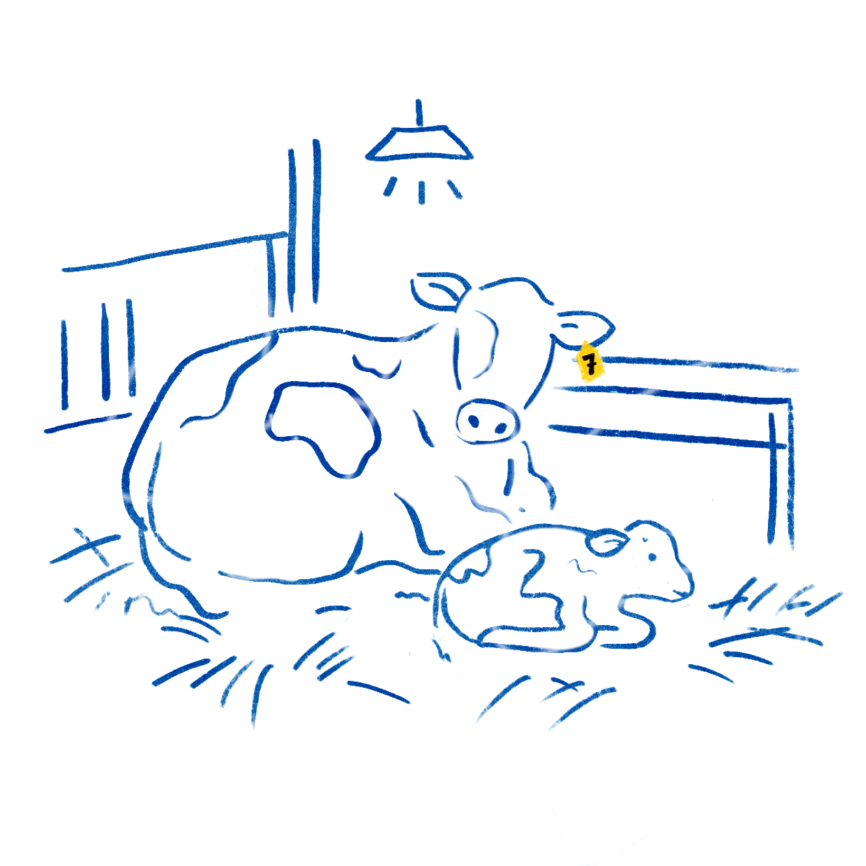
On most dairy farms, the calf is separated from her mother immediately after birth and reared separately. The calf is raised until she is old enough to enter the herd as a breeding animal.
She is bred
At around two years of age, a dairy heifer—a name for a female cattle who hasn't give birth yet— commonly becomes pregnant for the first time. Breeding often involve artificial insemination. Her pregnancy lasts roughly nine months: the same biological clock as human.
She gives birth
When she gives birth, the heifer becomes what we call a cow. The birth of her child also triggers the beginning of her first lactation.
She produces milk
She enters lactation and is milked by human regularly. In conventional dairy systems, she is typically bred again while producing milk.
For the cow, reproduction and milk production therefore become intertwined: calving starts lactation, pregnancy follows, and the cycle repeats.
She leaves the herd
The cow may finally leave the herd because of declining productivity, illness, reproductive problems, lameness, or other management decisions. Many dairy cows eventually enter the beef supply chain when they are killed.
Lactation As a Form of Maternal Care
Mammals are the only animals that produce milk from their mammary glands in response to produce sustenance and maternal care for their offspring. Until the young is able to chew and digest real food, they will usually strictly only consume this maternal production as a sole nutrition.
Calves are known as natural milk drinkers. Without any human intervention, they're known as vigorous feeders, often drinking large quantities in a single session.
In cows specifically, the first milk (colostrum), contains specific components which will support her calf's transition from intrauterine to parenteral nutrition. The special task of colostrum is the passive immunization of the newborn via its greater content of antibodies to bridge the first weeks of life until the offspring can produce its own antibodies¹.
In the dairy industry however, colostrum immediately harvested from the mother since its quality declines by approximately 4% for every hour collection is delayed.
What We Don't See Behind the Milk
By the time food reaches our plates, much of the work and life behind it has disappeared. A carton of milk arrives to us cold and sealed, far removed from the animal that produced it.
54%
Only after giving birth
10%
Only when fed certain feed
26%
All the time, naturally
10%
Not sure
In an individual survey conducted by author and participated by fifty respondents ranging from age 18-44, half of the them acknowledged that a dairy cow produces milk only after she gave birth.
But still 26% of the respondents believed that a dairy cow produces milk “all the time, naturally.” The rest of the respondents answered either they are not sure or "only after fed certain feed" when asked about how often they think cow produces milk.
In reality, milk production is tied to reproduction. A dairy cow only begin to produce milk after giving birth, so pregnancy and calving are part of the cycle behind our dairy milk on store shelves. But their life cycle can be short. Although cattle can live for around 20 years, dairy cows in high-producing or industrial systems have an average productive lifespan of only about three to four years after their first calving. Including the time before their first calving, many died at around four and a half to six years of age.
────────
We continue asking the respondents: do they know that dairy cows are kept pregnant for much of their lives to maintain milk production?
40%
TRUE
24%
FALSE
36%
Not sure
The answers to this question varied, with 40% of the respondents were aware of this situation while 24% believed it wasn't true.
This gap may prove that connection between reproduction and milk production, and the fact that it comes from an ever-pregnant animal, can be easy for people to miss. Perhaps that is by design.
────────
We then raised another question to the respondents: What usually happens to a calf shortly after birth?
54%
It's usually separated within a day or so
18%
Not sure
28%
It stays with its mother
Fifty-four percent of them knew that separation occurs within a day or immediately. Meanwhile, Twenty-eight percent thought that the baby usually stays with the mother.
On many commercial dairy farms, it is a routine practice to separate the calf from their mom within 24 hour of calving². The reasons are both economic and for human control. Early separation is often done to increase the amount of milk available for sale as calf is known to drink mother’s milk heavily. Another reason is to prevent a maternal bond from forming and making it harder to separate them later. Post separation, cows have been reported to show sign of distress: they will vocalize, calls become higher in pitch, and they stick their heads outside pens more frequently.
Cows are monotocous, meaning they usually carry only one child per pregnancy.
There are more and more people are concerned about the animal welfare side of this practice nowadays. Aside from early separation, there are many common practices that are being called out as 'cruel' in the dairy farming world. The first and foremost: the killing of male calves.
Disposal of Male Calves
When a male calf is born in a dairy farm, it is seen as economically unviable and inefficient. Their meat is often low of fat content and they do not contribute to milk production. More often than not, the decision is that they are immediately killed as baby calves. By killing them early, or often referred to as culling, owner of dairy farms won’t have to pay for housing, feed, or veterinary care.
Cited from Australian Veterinary Journal, in the state of Victoria only, about 600,000 male calves that are less than a week old were culled each year³.
Disbudding
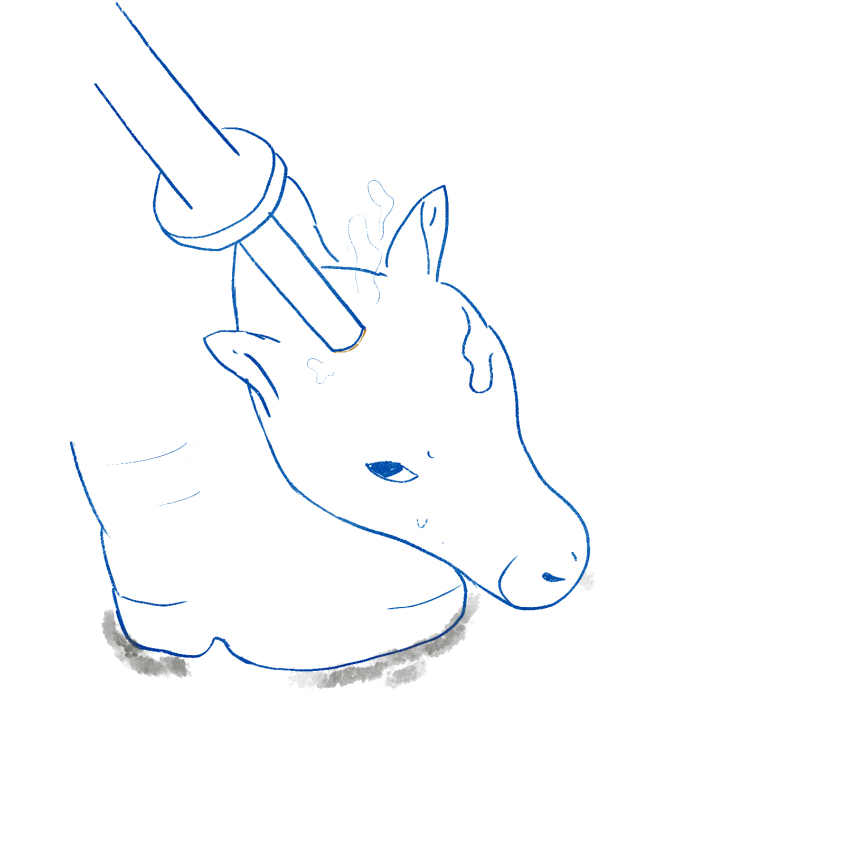
Disbudding refers to the removal of horn buds in young calves, goats, or sheep before the horns have a chance to grow and attach to the skull, which would make removal more difficult. This is done for the purpose of reducing risk of injuries to handlers and other animals. Some also believe that disbudding reduces aggression later in life.
Although disbudding is regulated under animal welfare laws—requiring that it be performed by trained individuals using appropriate pain management techniques—most of this practice is implemented often without the use of anasthesia. The horn buds of the young calves are usually removed using caustic paste or hot iron, both is said being very painful experiences for the animal.
Tail Docking
Tail docking means removing part of a cow's tail, usually done by rubber banding, hot blade, and rarely by surgical incision. This is still a common practice on dairy farms in many areas in the USA (even if it is prohibited in some states) and Australia.
With dairy cattle, it has historically been practiced because farmers believed it could improve hygiene, reduce the risk of manure contamination of the udder, and make milking more hygienic. The original rationale was that a long tail can become contaminated with manure. During milking, the tail may brush against the cow, the milker, or milking equipment. Many farmers therefore thought that shortening the tail would improve cleanliness and reduce the risk of contamination.
However, the scientific and veterinary consensus today is generally that routine tail docking does not provide those benefits sufficiently to justify the welfare costs. Many animal-welfare organizations and veterinary bodies oppose this procedure since it can cause acute pain to the animal.
Plant-Based Alternatives
A 2019 survey conducted by Mintel reveals that one-quarter of adults in the UK now drink some non-dairy milks (although not always exclusively). It’s even more popular in younger demographics with one-third of 16 to 23-year-olds opting for them.
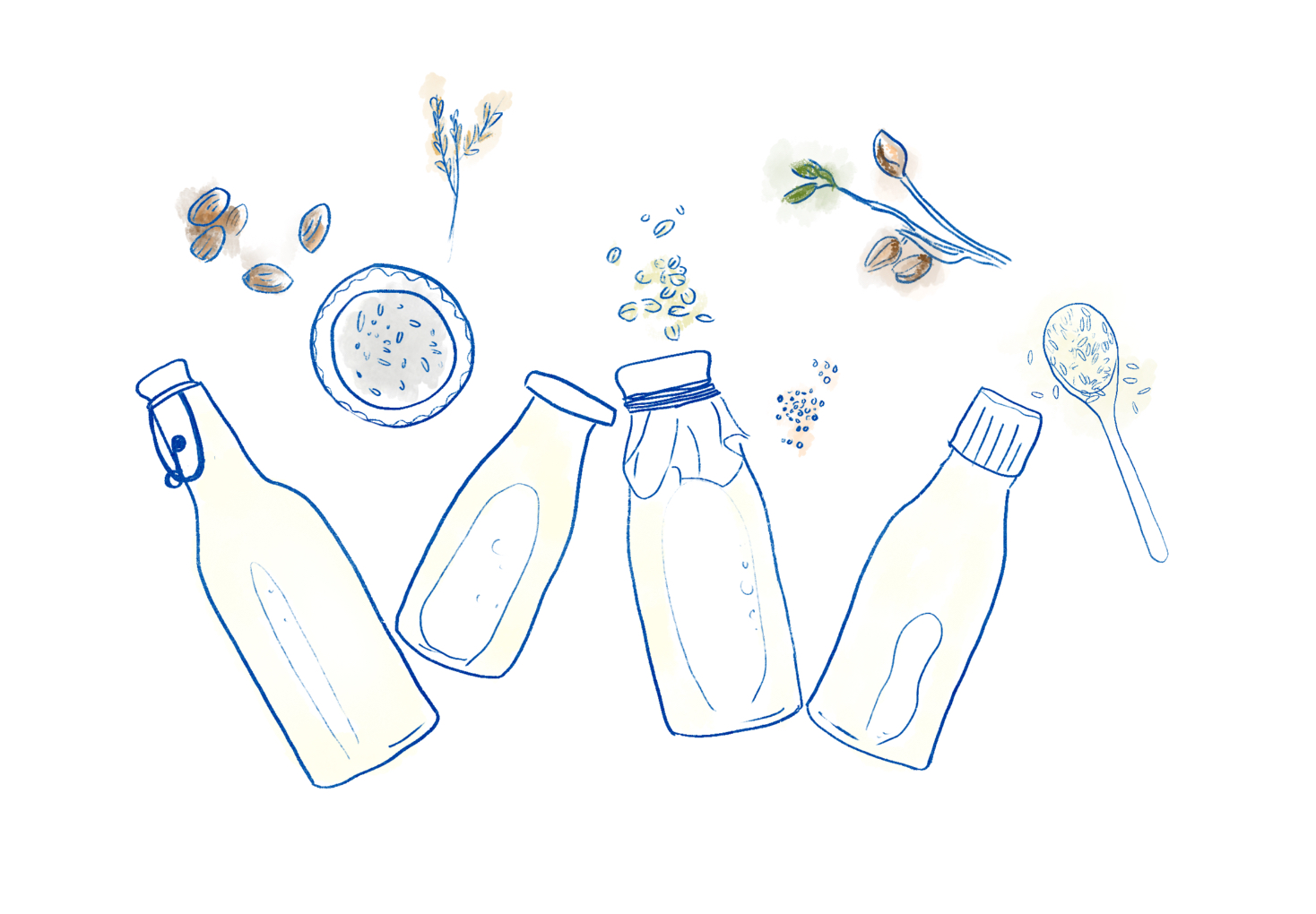
For the people who want to switch to plant-based alternatives, there are several substitute for dairy milk: oat, soy, almond, and rice milk. We try to rank them based on how greedy each milk produce in utilizing resources, with the first row being the greediest and the last one being the most efficient.
Land Use
Milk
m² per liter
Dairy Milk
8.95
Oat Milk
0.76
Soy Milk
0.66
Almond Milk
0.50
Rice Milk
0.34
Rice milk uses about 26 times less land than dairy milk, including the land used to grow feed for cows.
Greenhouse Gas Emissions
Milk
kg CO₂eq per liter
Dairy Milk
3.15
Rice Milk
1.18
Soy Milk
0.98
Oat Milk
0.90
Almond Milk
0.70
Almond milk has the lowest greenhouse gas emissions with less than a quarter of dairy milk's footprint.
Freshwater Use
Milk
liters per liter
Dairy Milk
628.20
Almond Milk
371.46
Rice Milk
269.81
Oat Milk
48.24
Soy Milk
27.80
When it comes to freshwater use, soy milk stands out for its low water use: about 28 liters use per liter milk.
Eutrophication
Milk
g PO₄eq per liter
Dairy Milk
10.65
Rice Milk
4.69
Oat Milk
1.62
Almond Milk
1.50
Soy Milk
1.06
Choosing soy milk instead of dairy can reduce water nutrient pollution by about 10 times.
One pattern is consistent in the data: compared with dairy, all of the plant-based alternatives in this comparison have lower impacts across these four measures. In the end, it is really a choice between different environmental trade-offs.
Beyond the metrics, there's another consideration: dairy production directly involves animal welfare concerns that plant-based alternatives avoid. Plant-based alternative may remove the need to keep animals as part of the system of producing milk for human consumption. Our choice therefore involves very different environmental and a real ethical costs behind what we choose to drink: the cost we never really weigh in before.
How we can make their lives better?
Besides consuming less or no dairy, we can make a difference by asking for greater transparency about where our milk comes from. Are the cows grazing in open fields, or living in confinement? What happens to the calves? What happens to the cows when their milk production declines?
The image of a black-and-white cow peacefully grazing in a green field is familiar to many of us. But what happens behind that image is often less visible. Perhaps one place to easily start is simply by asking more questions about the products we consume.
More Resources
These resources may help us look further into the subject and
consider what we can do as consumers: